
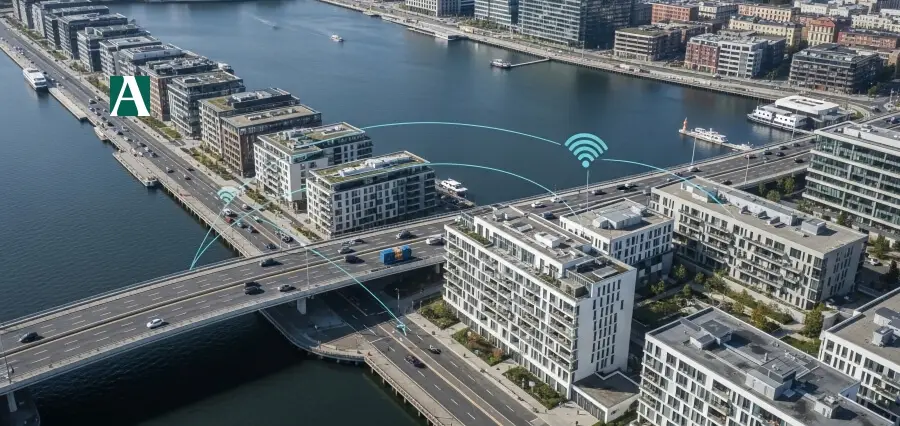
The presence of waterways in the past has been crucial due to the significant transportation routes that they offered. Millions of people are transported each year through them, and many commercial activities take place through them. Nevertheless, population increase, environmental challenges, risks posed by climate change, increasing amounts of trade, and old infrastructure have complicated the management of waterways. On the other hand, the use of digital technology allows organizations managing water resources and navigation to become more efficient and make better decisions.
Smart Waterway Management has become a new direction for waterways management, which indicates a departure from the conventional practice to a connected and data-intensive environment. Modern technologies such as sensors, satellites, AI, IoT devices, clouds, and analytics provide a means for authorities and operators to get more accurate insights into the state of waterways. Rather than depending on inspections and historical data, modern systems allow the continuous collection and analysis of data. This advancement allows stakeholders to make decisions quicker and improve their efficiency and safety.
The Digital Shift
Waterway management in its traditional sense was very much dependent on physical inspections, periodic maintenance, manual reporting, and information from different systems. Decisions were taken based on information that was not always readily available. However, while all these things have value, there could be problems in situations where there are sudden changes. This could involve changes in the water level, weather, traffic, sedimentation, or even the condition of the infrastructure. A system based on periodic assessments might not give enough visibility for making those decisions.
The digital era is progressively compensating for these inadequacies. Interconnected sensor networks will be able to monitor various parameters like the water level, flow rate, weather, vessel movements, quality of water, and efficiency of infrastructure in real time. The Geographic Information Systems technology is able to integrate all this information with maps and other information for a better understanding of the total situation in the entire waterway system. Cloud computing systems can provide access to all this data to various parties, while automatic alerts can help detect anomalies and alert operators even before they become problems.
Intelligence at Work
The next phase of Smart Waterway Management is being developed using artificial intelligence and analytics. Information gathering is not the only element of good digital management. The real value can be achieved from transforming big amounts of data into knowledge. Machine learning will be able to process historical and live data and detect patterns and predict any difficulties that might occur. For instance, data on water level, weather conditions, shipping vessels, and infrastructure can allow for predicting potential congestion or floods.
The ability to predict can affect the way the infrastructure is handled. Instead of handling malfunctions of the machinery, locks, bridges, gates, or any other asset, predictive modeling may be applied in order to anticipate the beginning of failures and handle maintenance based on real-life situations. Such an approach will allow eliminating any surprises, extending the life of the asset and optimizing the spending of money on maintenance. Artificial intelligence can be useful in navigation, predicting the traffic and environment, allowing the movement of vessels to be coordinated without delays.
Building Connected Networks
In order to achieve a future state of successful Smart Waterway Management, technology alone will not suffice; it will also require the ability to share information. Waterways do not end at borders or jurisdictions; port authorities, municipalities, environmental agencies, ship owners, infrastructure companies, and emergency services can all be using the same network. In the absence of interoperable digital technology, this opportunity will not materialize.
Connectivity is going to be increasingly important in the future because waterways will be facing additional stresses. The effects of climate change have meant that some types of floods, droughts, and storms have been becoming more common, and adaptive management is needed. For the future, potential solutions may include satellite imagery, sensors, forecasting, vessel information, digital twins, and even artificial intelligence to find out what might happen in the future. It would also be useful for scenario analysis. The field of cybersecurity and data management will also gain importance.
Conclusion
The emergence of Smart Waterway Management is about more than mere technological progress. In essence, it is a paradigm shift in thinking and managing and protecting waterways. The successful execution demands adequate infrastructure, information, analysis, management, and coordination of all interested parties. Technology may offer more visibility and valuable knowledge for making decisions; however, an organization should set objectives, governance, capable teams, and collaboration as well.
Considering the development of the connected world, it looks likely that waterways could become a part of digital environments in the future. Real-time information will help to navigate safely; predictive maintenance will protect critical infrastructure, while intelligent analysis will promote environmental responsibility. In other words, the future of waterway management would be proactive, responsive, and resilient. Using the potential of technology and practical knowledge, it is possible to develop waterways to withstand any changes of the world in the future.